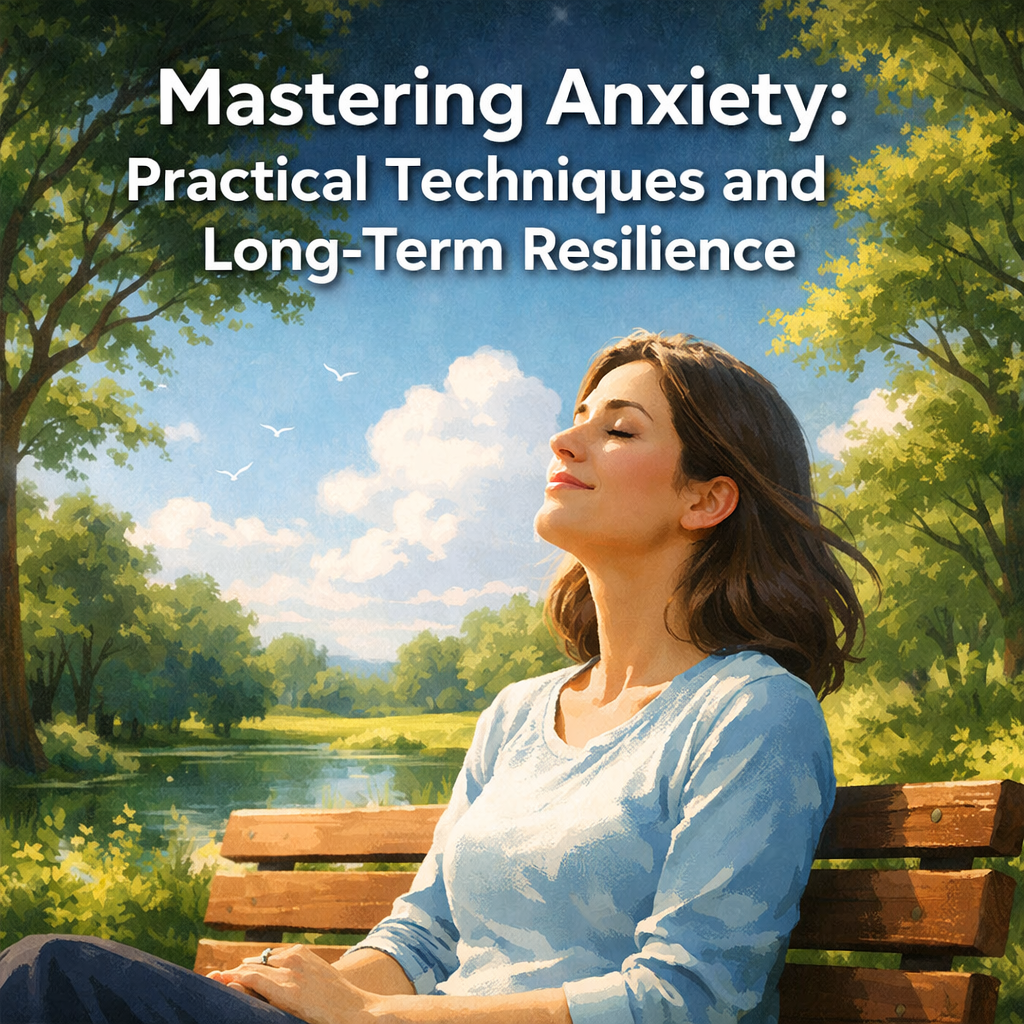
Mastering Anxiety: Practical Techniques and Long-Term Resilience
Mental HealthAnxietyAdviceMotivationHappinessResilienceStoicismMeditationBreathing Techniques
Anxiety is a pervasive challenge in our modern lives, and while its root causes are significant, our reactions to it hold even greater importance. The connection between our emotions and physiological state is undeniable; repeated emotional experiences shape our bodies' responses. To overcome anxiety, we must consciously work on altering our reactions. Controlled breathing techniques, such as the 4-7-8 method, can effectively regulate our physiological state during moments of anxiety. This involves inhaling deeply for 4 seconds, holding for 7 seconds, and exhaling slowly for 8 seconds, repeated several times, engaging the diaphragm to promote relaxation and improve blood flow. Meditation is another potent tool for managing anxiety. It encourages deep, controlled breathing and teaches us to observe thoughts and feelings without judgment, fostering relaxation, patience, and resilience. Sharing our thoughts and feelings with trusted individuals can also alleviate anxiety. Verbalizing our emotions to friends, family, or mental health professionals can provide support, encouragement, and stability, helping us realize that our concerns may not be as overwhelming as they initially seem. Stoicism offers a unique approach through negative visualization, where we imagine the worst-case scenario and learn to accept it. This exercise enables us to think ahead, recognize our ability to handle challenges, and ultimately reduce anxiety. While pleasure might seem like a quick fix, it is a false god that will eventually fail us. The reality is that anxiety never completely disappears; instead, we become more adept at managing it. High performers under pressure aren't necessarily less anxious but have developed effective coping strategies. Rather than seeking instant solutions, we should embrace a long-term mindset, gradually building resilience and equipping ourselves with tools to navigate anxiety when it arises. This journey involves consistent effort and self-awareness, leading to a more balanced and resilient life. Remember, managing anxiety is a continuous process, not a destination. Embrace the journey, and you will find yourself better equipped to handle life's challenges.
0:000:00