The Echoes of Unmirrored Selves: Understanding Narcissism and Its Impact
NarcissismParentingMotherhoodTraumaSelfAttachment
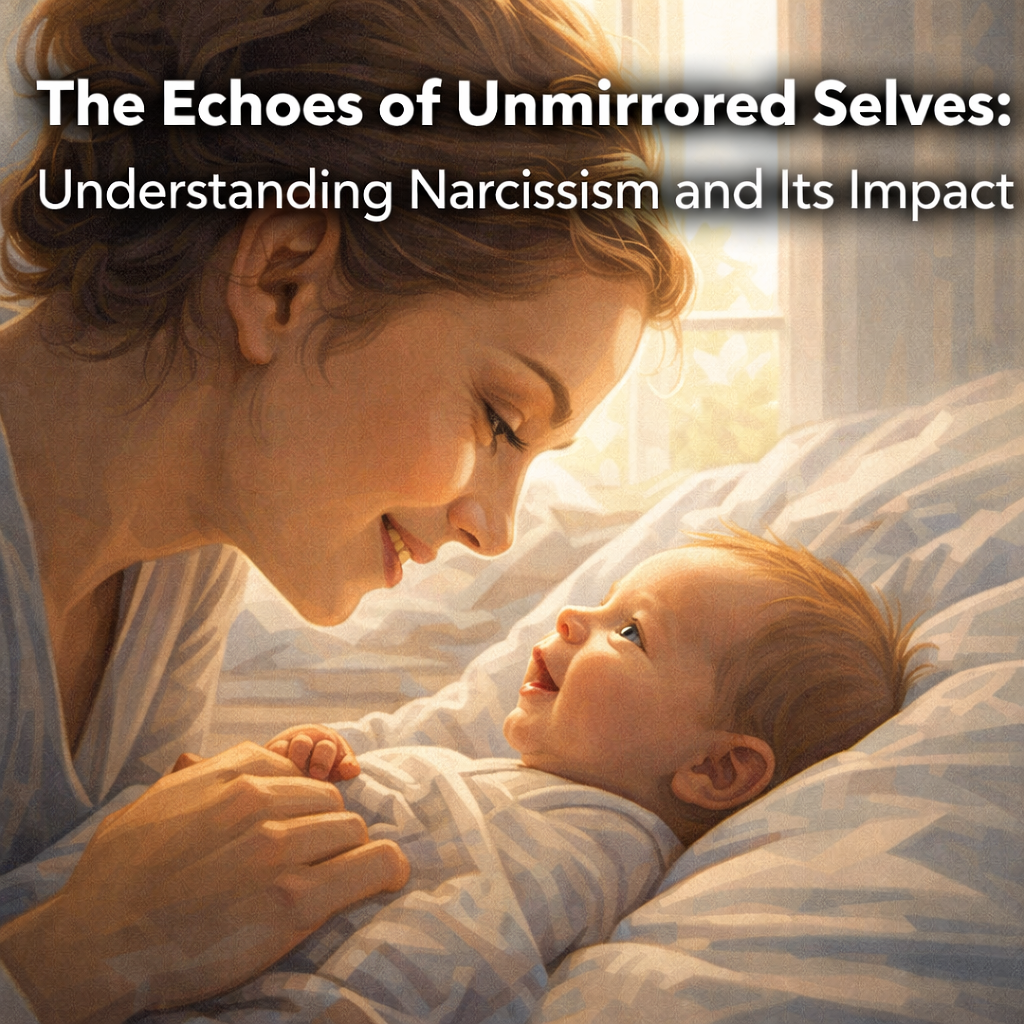
The myth of Narcissus serves as a stark reminder of the isolating nature of narcissism, where individuals are often too consumed with their own reflection to truly connect with others. This self-absorption stems from a fundamental deficit: a lack of a healthy relationship with oneself, leading to reliance on external validation for self-definition. This void often originates in childhood, where inadequate mirroring from caregivers leaves lasting scars. Mirroring, a crucial early experience, allows us to feel seen, understood, and validated. Through attuned caregivers, infants learn about their experiences and develop the ability to self-soothe. However, when parents are emotionally unavailable due to their own unresolved traumas, children miss the opportunity to see themselves reflected and responded to, hindering their sense of self and their understanding of social exchange. Narcissistic parents, often unable to provide this mirroring due to their own unaddressed wounds, perpetuate a cycle of trauma. They may require constant admiration and support, creating a dysfunctional family dynamic where the child's needs are secondary. This can lead to the child losing touch with their authentic self and internalizing the message that their worth is contingent on meeting the needs of others. The absence of mirroring and attunement in childhood can have profound consequences, hindering the development of a strong and healthy sense of self. Without it, individuals may struggle with anxiety, self-doubt, and difficulty in relationships. However, therapy offers a path to healing, helping survivors of narcissistic parenting rebuild their relationship with themselves and cultivate the self-awareness needed for post-traumatic growth. Ultimately, feeling seen, understood, cared about, and lovingly cherished is essential for healthy development and a fulfilling life.
0:000:00