The Unseen Burden: Sharing the Mental Load in Relationships
relationshipsmental loadcommunicationempathypartnershipchoresunderstandingsupportteamworklove
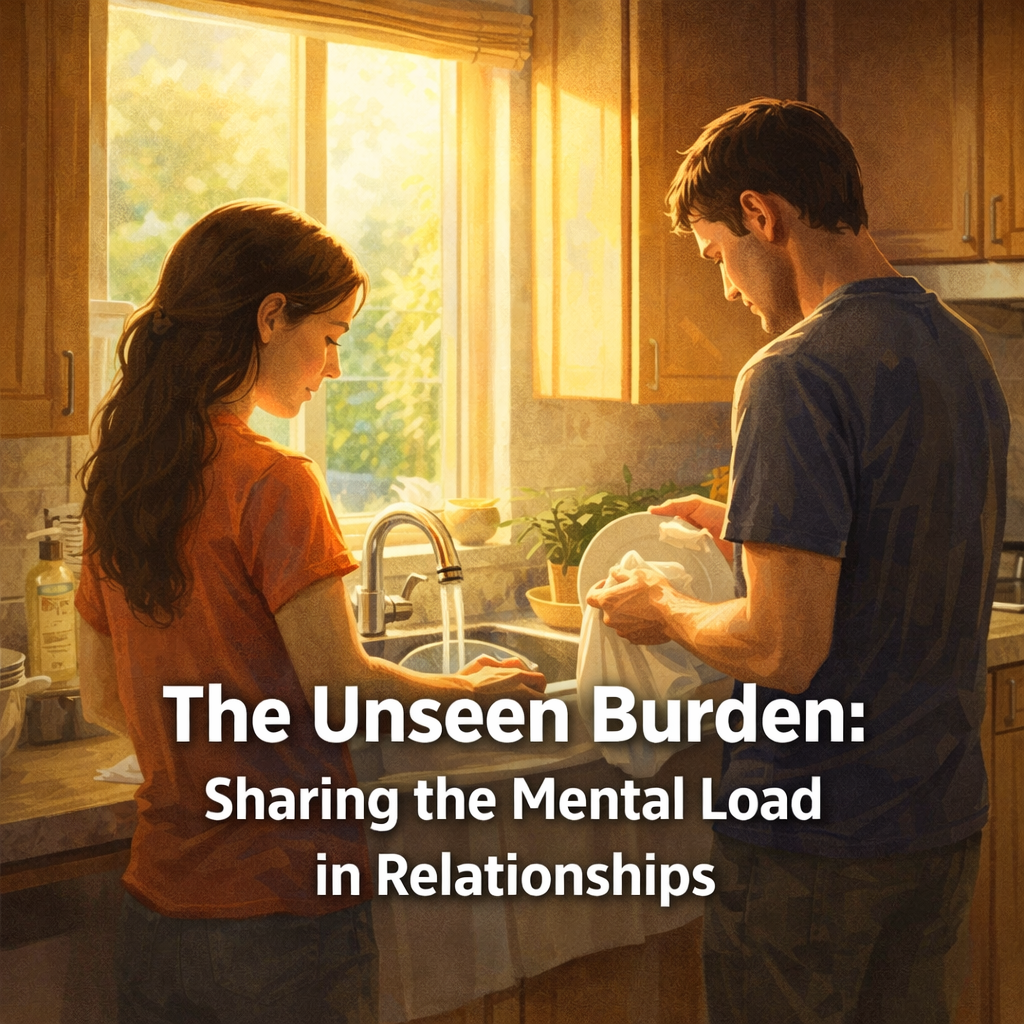
In relationships, particularly within the context of family and shared responsibilities, an imbalance often arises where one partner carries a disproportionate amount of the 'mental load.' This refers to the cognitive effort required to manage tasks, anticipate needs, and maintain the overall organization of daily life. Often, this burden falls on one partner, leading to feelings of being undervalued, overwhelmed, and disconnected. To address this imbalance, it's crucial to cultivate empathy and understanding. One effective approach is for the other partner to immerse themselves in the daily routines and responsibilities of their significant other, shadowing them and proactively taking on tasks without being asked. This experience provides a firsthand understanding of the mental and emotional labor involved, fostering appreciation and a deeper connection. By actively seeking to understand and alleviate the mental load, partners can create a more equitable and supportive dynamic, strengthening their bond and fostering a sense of shared responsibility. This involves open communication, a willingness to listen without defensiveness, and a genuine desire to create a more balanced and harmonious partnership. Ultimately, recognizing and addressing the mental load is an act of love and a commitment to building a stronger, more resilient relationship. It requires a shift in perspective, from viewing tasks as individual responsibilities to seeing them as shared contributions to a common goal. This collaborative approach not only lightens the burden on one partner but also fosters a sense of teamwork and mutual respect, enriching the relationship as a whole. It's about creating a space where both partners feel valued, supported, and understood, leading to a more fulfilling and connected life together. The journey towards a more balanced distribution of the mental load begins with awareness, empathy, and a willingness to actively participate in creating a more equitable and supportive partnership. It's a continuous process of communication, adjustment, and mutual understanding, ultimately leading to a stronger and more fulfilling relationship for both partners.
0:000:00