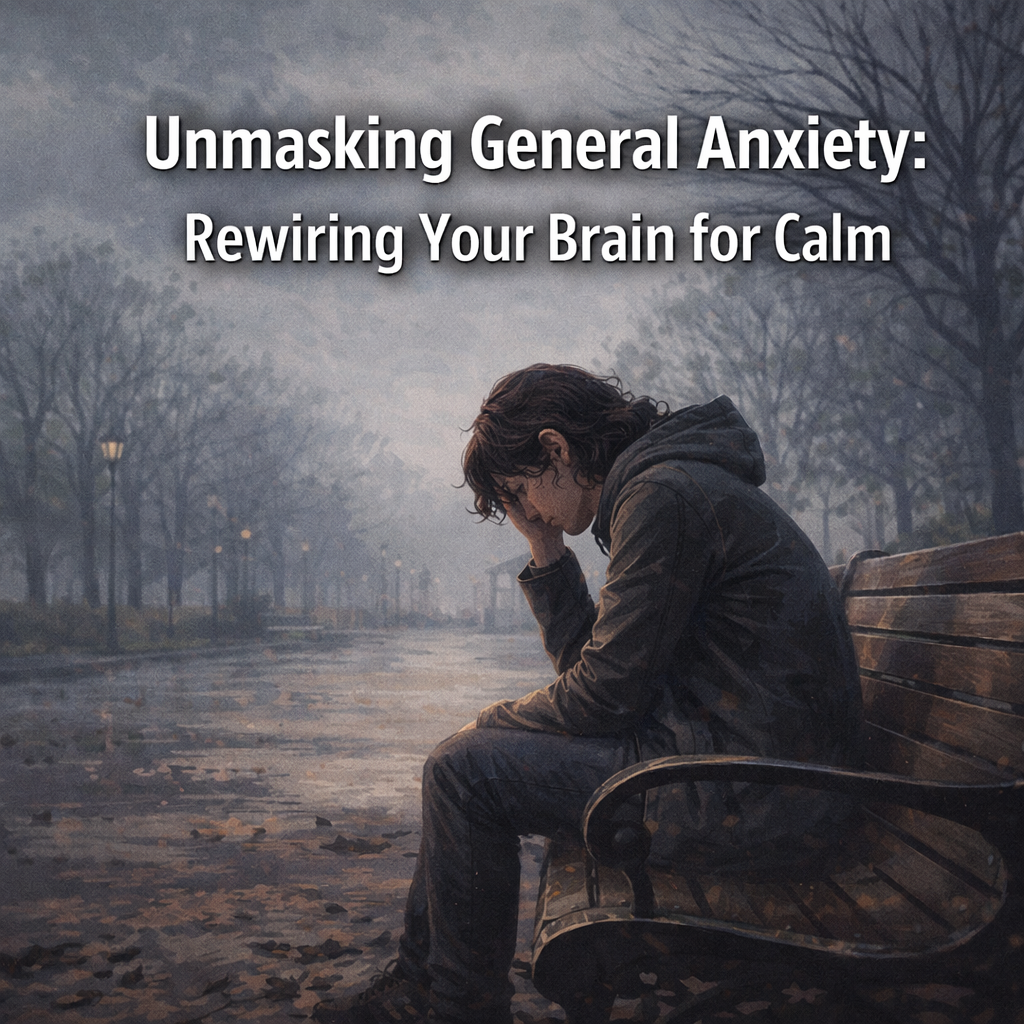
Unmasking General Anxiety: Rewiring Your Brain for Calm
General Anxiety DisorderAnxietyCognitive DistortionsTraumaMental HealthEmotional RegulationValuesTherapyRewiring the BrainThinking Patterns
General Anxiety Disorder (GAD) often manifests as a persistent feeling of unease, not tied to specific events. It's crucial to understand that anxiety, in many cases, is a learned behavior, not an immutable trait. You have the power to rewire your brain, fostering a healthier and happier state of mind by acquiring skills to better manage your emotions.
One significant contributor to unexplained anxiety is our thinking patterns. Cognitive distortions like black-and-white thinking, mind-reading, and catastrophizing can exacerbate anxiety. These patterns often operate beneath our conscious awareness, making it difficult to identify the root cause of our distress. Recognizing and challenging these distortions is a key step in managing anxiety. For instance, instead of thinking 'I'm a complete failure' after a mistake, try 'I need to do some research'.
Anxiety can also stem from unresolved past traumas. Sometimes, the resurgence of painful memories indicates that you're finally ready to process and heal from these experiences. In such cases, it's essential to slow down, listen to your body, and allow yourself to process the emotions and thoughts associated with the trauma. Seeking professional help from a trauma specialist can be invaluable during this process.
Furthermore, your physical health plays a crucial role in managing anxiety. Factors like caffeine intake, substance use, sleep patterns, exercise, and diet can significantly impact your body's ability to regulate emotions. Addressing these lifestyle factors can have a profound effect on your overall well-being and anxiety levels. Even small changes, like going to bed earlier or taking a short walk, can make a difference. It's also wise to rule out any underlying physical conditions by consulting a doctor and getting necessary blood work done.
Finally, anxiety can serve as a signal that you're not living in alignment with your values. If your actions contradict your beliefs, anxiety can arise as a warning sign. In such cases, changing your thinking patterns or taking supplements won't address the underlying issue. Instead, it's essential to identify the values you want to embody and take small steps towards living in accordance with them. Remember, values empower you to make positive changes, while anxiety disorders often encourage avoidance and shrinking away from problems.
Ultimately, overcoming anxiety involves a multifaceted approach that addresses your thinking patterns, past traumas, physical health, and values. By making small, consistent changes in these areas, you can rewire your brain and cultivate a healthier, happier life. Seeking guidance from a therapist can provide individualized support and advice throughout this journey.
0:000:00