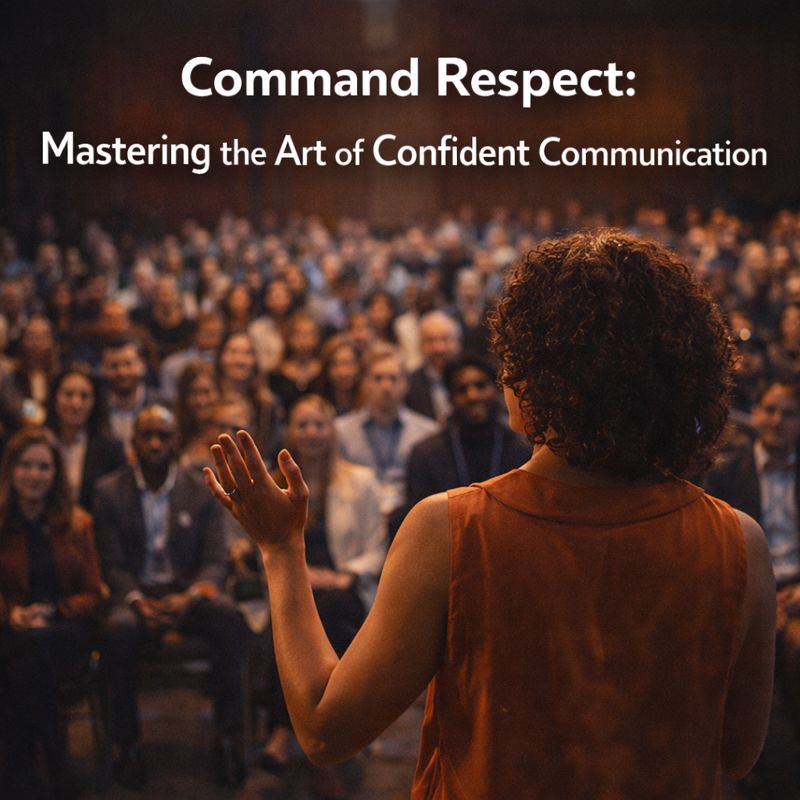
Command Respect: Mastering the Art of Confident Communication
Personal GrowthMotivationSelf ConfidencePublic SpeakingCommunication Skills
True respect isn't about being the loudest or the smartest person in the room; it's about the way you carry yourself, the way you articulate your thoughts, and the value you place on your own words. It begins with eliminating unnecessary apologies that diminish your presence. Constant apologies erode your perceived value, making you seem unsure and less deserving of attention. Instead, reframe your language to express gratitude for others' patience or to directly state your intention without self-deprecation. Setting firm boundaries is crucial. Without them, others may encroach upon your time and energy. Boundaries aren't rude; they are a clear communication of how you expect to be treated. While some may initially resist these boundaries, consistency will lead to adaptation and respect for your limits. Learn to harness the power of silence. Pauses during conversation aren't signs of weakness but rather tools that command attention and lend weight to your words. Avoid rushing or filling every silence, as this can dilute your message. A well-placed pause conveys confidence and control, allowing your message to resonate more deeply. Humor can be a powerful tool for connection, but it should be used judiciously. Avoid self-deprecating humor that undermines your credibility. Instead, use humor to support your message and build rapport without making yourself the subject of ridicule. Refrain from engaging in gossip, as it erodes trust and damages your reputation. Speaking negatively about others behind their backs creates the impression that you're likely to do the same to them. By refusing to participate in gossip, you project maturity and reliability, earning genuine respect. Finally, know when to stop talking. Rambling beyond your point dilutes your message and diminishes your impact. Silence after making your point allows others to process your words and respond thoughtfully. This demonstrates confidence and respect for the conversation. Cultivating these habits will not only shape how others perceive you but also how you perceive yourself. Start by making small changes: eliminate unnecessary apologies, set clear boundaries, use pauses strategically, avoid gossip, and practice concise communication. Respect begins the moment you decide to value your own voice.
0:000:00